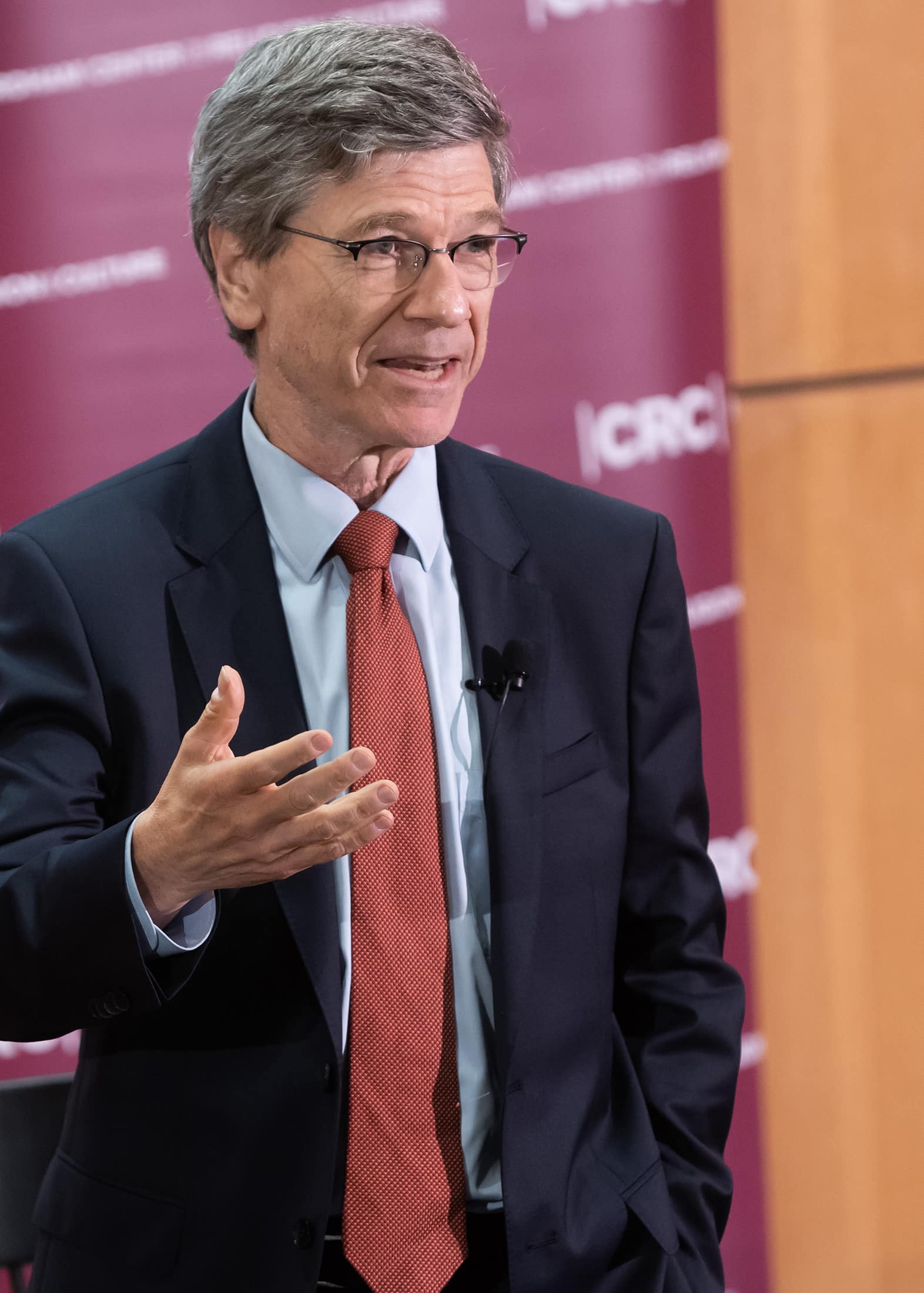

Jeremy Rifkin is a highly influential American economist, social theorist, and futurist, celebrated for pioneering the concept of the "Third Industrial Revolution." He is a strategic advisor to the European Union and the People's Republic of China, providing the blueprint for transitioning global economies into sustainable, low-carbon paradigms. His work is critical for understanding the monumental shifts brought by scientific and technological changes on the global economy and environment.
Rifkin’s influence is profound at the highest levels of global governance. Since 2000, he has served as an economic advisor to the European Union, designing the Third Industrial Revolution Long-term Economic Sustainability Plan to address the triple challenge of the economic crisis, energy security, and climate change. Simultaneously, he is advising the leadership of the People’s Republic of China on integrating the Internet Plus Third Industrial Revolution infrastructure, a plan that The Huffington Post called the "most momentous shift in direction since the death of Mao."
As President of the TIR Consulting Group, LLC, Rifkin works with cities, regions, and national governments to develop the Internet of Things (IoT) infrastructure for a Collaborative Commons and a Third Industrial Revolution. His global economic development team is actively working with regions like Hauts-de-France and the Grand Duchy of Luxembourg in the conceptualization and scale-up of this smart infrastructure, translating his theory into real-world economic transformation.
The author of 20 bestselling books, including The Zero Marginal Cost Society and The Third Industrial Revolution, Rifkin has been ranked among the world’s most influential economic thinkers. He has lectured at the Wharton School’s Executive Education Program since 1995, instructing CEOs and senior management on transitioning their business operations into sustainable economies. His keynotes provide an essential, high-level strategic vision for leaders navigating the convergence of technology, economics, and environmental imperatives.